Cosmetic Dentistry Options for a Brighter, Whiter Smile

A brighter smile is one of the most common reasons people ask about Cosmetic Dentistry, and for good reason. Tooth color changes over time. Coffee, tea, red wine, tobacco, certain medications, normal enamel wear, old dental work, and even genetics all affect how teeth look. Some people have healthy teeth that simply appear darker than they would like. Others have stains, chips, uneven edges, or fillings that make the whole smile look tired.
What surprises many patients is how many different paths lead to a whiter-looking smile. Bleaching is only one option. In practice, the best result often comes from choosing the right treatment for the specific cause of discoloration, then matching that treatment to the person’s budget, timeline, and tolerance for maintenance. A college student wanting a quick refresh before graduation usually needs something very different from a bride replacing discolored front bonding, or a retiree considering veneers after years of enamel wear.
That toothworksofbakersfield.com Cosmetic Dentistry is where careful planning matters. Cosmetic Dentistry can create beautiful changes, but not every white smile is the same, and not every treatment is interchangeable. Shade, translucency, texture, facial features, gum display, and bite all play a role. The goal is rarely to make teeth look unnaturally bright. It is to make them look healthy, balanced, and believable.
Why teeth lose brightness in the first place
To understand which treatment makes sense, it helps to separate two broad causes of discoloration. Extrinsic stains sit on the outer surface of the tooth. These usually come from foods, drinks, smoking, or inadequate polishing over time. Intrinsic discoloration happens within the tooth structure itself. That may result from aging, trauma, root canal treatment, developmental conditions, certain antibiotics taken during tooth formation, or long-term enamel thinning that lets the darker inner dentin show through.
This distinction matters because whitening products tend to work best on certain kinds of staining and much less well on others. A patient with yellowing from age and coffee may respond beautifully to professional bleaching. A patient with gray discoloration after trauma to a front tooth may need internal bleaching, bonding, or a veneer instead. I have seen people spend months cycling through over-the-counter strips on a single dark tooth, only to find that the issue had nothing to do with surface stain at all.
The other factor is contrast. Sometimes the teeth themselves are not especially dark, but old fillings, chipped edges, or one mismatched crown make the smile appear dull. In those cases, brightening the natural teeth is only part of the equation. The restorations may also need to be replaced to match the new shade.
Professional whitening, the most conservative place to start
For many patients, whitening is the simplest and least invasive route to a fresher smile. It preserves natural enamel, costs less than veneers or crowns, and can often produce a noticeable change in a short period.
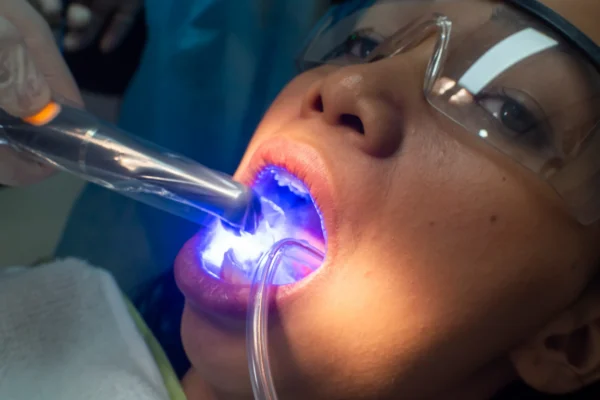
There are two main professional approaches: in-office whitening and take-home whitening provided by a dentist. In-office treatment uses higher-strength materials under controlled conditions. The appointment often lasts around 60 to 90 minutes, sometimes longer if several rounds are done. It is appealing to people who want immediate results for an event or simply prefer speed. The trade-off is that some patients experience more post-treatment sensitivity, and the final shade can continue to settle over a few days.
Dentist-supervised take-home whitening usually involves custom trays and a lower-concentration gel used over one to two weeks, sometimes longer. In real-world use, this method is often more flexible and more predictable than people expect. Because the trays fit closely, the gel stays where it should, and wear time can be adjusted if sensitivity develops. Many dentists prefer this route for patients who want control and the ability to do touch-ups later. It is not uncommon for someone to keep their trays for years and use them occasionally before a major event.
Over-the-counter whitening strips and generic trays can help mildly stained teeth, but the fit is less precise and the results are usually less even. For some people they are perfectly adequate. For others, especially those with crowding, exposed roots, or patchy stain patterns, they can be frustrating.
One practical point often gets overlooked: whitening changes natural tooth color, but it does not whiten crowns, veneers, fillings, or bonding. If you whiten first and your front restorations no longer match, you may need to replace them. That is not a flaw in the process. It is simply part of planning intelligently.
When polishing and hygiene make a bigger difference than people expect
Not every dull-looking smile needs bleaching. A professional cleaning can remove surface stain and hardened deposits that make teeth look darker or chalkier. Polishing can also restore a smoother, more reflective surface. I have seen patients arrive convinced they needed veneers, then leave after a cleaning with a smile that already looked two shades brighter.
This is especially true when stain has built up around the gumline or between teeth. Smokers, heavy coffee drinkers, and patients who use chlorhexidine mouthwash for extended periods often fall into this category. The teeth have not necessarily changed much internally. They are just coated.
Cleaning is also the right first step when there is any sign of gum inflammation. Whiter teeth do not look their best against puffy, red gums. In Cosmetic Dentistry, healthy soft tissue matters as much as tooth shade.
Bonding for chips, stains, and shape problems
Composite bonding is one of the most useful tools in modern cosmetic practice. Tooth-colored resin can cover localized discoloration, repair small chips, close minor gaps, lengthen worn edges, and improve symmetry. It is conservative, often completed in one visit, and less expensive than porcelain restorations.
Bonding is particularly valuable when whitening alone will not solve the visual problem. A front tooth with a white spot, a brown groove, or an irregular edge can still draw the eye even if the overall smile is brighter. In those cases, targeted bonding after whitening may create a more harmonious result than more bleaching would.
The trade-offs are worth understanding. Composite is beautiful when done well, but it is more prone to staining and wear than porcelain. Coffee, curry, red wine, and tobacco can discolor it over time. It may need periodic polishing, repair, or replacement. Longevity depends heavily on where the bonding is placed and how the patient uses their teeth. A tiny chip repair can last for years. Extensive edge bonding in a patient who clenches may need maintenance sooner.
Still, for the right case, bonding offers a practical middle ground. It is one of the few cosmetic treatments that can make a visible difference without significant tooth reduction.
Veneers, when shade and shape both need a reset
Porcelain veneers are thin ceramic shells bonded to the front surface of teeth, usually in the smile zone. They can dramatically improve color, shape, length, proportion, and minor alignment issues. For patients with deep intrinsic staining, uneven wear, multiple old fillings, or longstanding dissatisfaction with several front teeth, veneers can provide a level of control that whitening cannot.
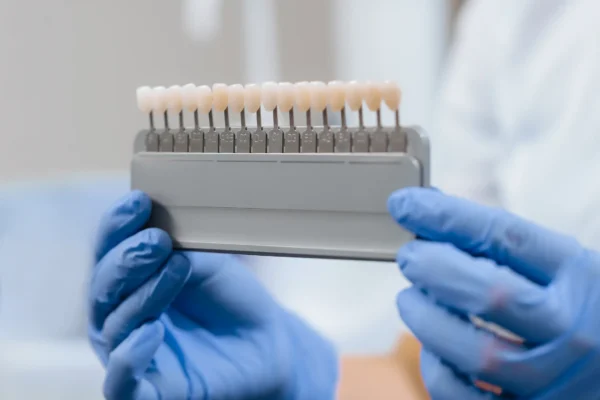
This is often where expectations need the most careful discussion. Veneers are not a whitening treatment. They are a restorative and cosmetic redesign. The process typically involves planning the smile, selecting a natural-looking shade, preparing the teeth to some degree, taking records, and fabricating custom porcelain restorations. In the best cases, the result does not scream "veneers." It simply looks like the person was born with healthier, more luminous teeth.
Good veneer work respects individuality. Not every patient wants the same brightness. A twenty-five-year-old with broad features and a high lip line may suit a clean, bright enamel effect with subtle translucency. A sixty-year-old patient with facial character and lower lip mobility may look far more elegant with a softer, slightly warmer shade that blends naturally with their age and complexion. Very opaque, ultra-white veneers can flatten the smile if they are chosen without regard for light reflection and facial balance.
Veneers also require commitment. They are more costly than whitening or bonding. They are not reversible in the practical sense once enamel has been reduced. They can chip under heavy function, and they still need excellent hygiene. Patients who grind or clench often need a night guard to protect the investment.
Crowns for teeth that need strength as well as cosmetic improvement
When a tooth is heavily filled, structurally weak, cracked, or has had root canal treatment, a crown may be more appropriate than a veneer. Crowns cover the entire tooth and provide reinforcement along with cosmetic change. If a dark, brittle front tooth has significant structural compromise, choosing a veneer simply because it sounds more conservative can be the wrong call.
Cosmetic results with modern ceramic crowns can be excellent, but the planning is different. The dentist has to think not only about shade and contour, but also about margin placement, bite forces, gum architecture, and the way light passes through the material. Matching a single front crown to neighboring natural teeth remains one of the hardest tasks in dentistry. It can be done beautifully, but it requires judgment, communication with the lab, and sometimes a willingness to revise if the first try is close but not right.
Patients often assume the brightest material will look best. In reality, a slightly softer, more layered ceramic usually produces the most natural result.
Gum contouring and why "white teeth" are only part of the picture
A smile can appear short, uneven, or shadowed because of excess gum tissue or an irregular gumline. In these situations, the teeth may not be too dark at all. They may simply be visually crowded by the surrounding tissue. Gum contouring, done with a laser or traditional techniques depending on the case, can expose more natural tooth structure and create a cleaner frame around the smile.
This is especially helpful in patients with a gummy smile or uneven gingival margins on the front teeth. Even a modest adjustment can change the way light hits the teeth and make the smile appear brighter without altering the teeth themselves.
Of course, not all gum asymmetry should be treated cosmetically. If the issue stems from periodontal disease, recession, or altered bone levels, the treatment plan must address health first. Cosmetic Dentistry works best when it is layered on top of sound diagnosis, not used to hide unstable conditions.
Whitening for one dark tooth, a separate problem entirely
A single dark tooth is its own category. The cause may be trauma, a dying nerve, a previous root canal, internal staining, or an old restoration showing through. Standard external whitening often does little in these cases.
If the tooth has had root canal treatment and is otherwise sound, internal bleaching may be an option. This involves placing whitening material inside the tooth under controlled conditions. In other cases, bonding, a veneer, or a crown may be more reliable. The right answer depends on why the tooth darkened, how much healthy structure remains, and whether the adjacent teeth are also being whitened.
This is one of those areas where internet advice regularly leads people astray. Treating a single dark front tooth like generalized yellowing wastes time and can delay diagnosis of a more significant issue.
Straightening teeth can make them look brighter
Orthodontic treatment is not usually the first thing people think of when they want a whiter smile, yet alignment changes appearance more than many patients expect. Teeth that are crowded, rotated, or overlapping collect more stain and are harder to clean thoroughly. Shadows fall unevenly across their surfaces. Once aligned, they reflect light more evenly and often appear cleaner and brighter even before whitening.
Clear aligners are commonly part of cosmetic treatment planning for adults who want a more polished smile without extensive restorative work. A patient with mild crowding and discoloration may get a better long-term result by straightening first, then whitening, rather than placing veneers on otherwise healthy teeth just to create the illusion of alignment.
This is a good example of Cosmetic Dentistry how Cosmetic Dentistry should not be reduced to "what looks fastest." Sometimes the conservative path takes longer, but leaves more natural tooth structure intact.
Questions worth asking before choosing a treatment
Choosing among cosmetic options is easier when you narrow the goal. The best consultation is not just about "how white can we go," but about what bothers you when you look in the mirror and what level of treatment feels reasonable.
- Is the main issue overall tooth shade, or one specific tooth, filling, chip, or shape problem?
- Are there crowns, veneers, fillings, or bonding in the smile zone that will not change color with whitening?
- Do you want the most conservative option first, even if the result is more modest?
- Are you willing to maintain the result with touch-ups, polishing, or a night guard if needed?
- Is your timeline flexible, or do you need improvement before a wedding, job interview, or photos?
These questions sound simple, but they often reveal the difference between a quick whitening case and a more involved smile plan.
What results realistically look like
A common misconception is that healthy teeth should be paper white. Natural enamel varies. It also has depth, with brighter highlights on the ridges and slightly darker or more translucent areas near the edges. Teeth that are too uniformly opaque can look artificial, especially under daylight.
Professional whitening often moves yellow shades lighter quite well. Brownish surface stains may also improve significantly. Gray tones tend to be more stubborn. Tetracycline-related discoloration can be especially difficult and may require extended bleaching or restorative coverage. Sensitivity, enamel thickness, age, and existing dental work all influence the outcome.
A good cosmetic dentist usually talks in ranges rather than promises. That is not evasive. It is honest. Biology does not behave like paint.
The role of maintenance, where many cosmetic results are won or lost
Even excellent cosmetic work needs upkeep. Whitening fades gradually because daily life continues. Porcelain stays color stable, but the surrounding natural teeth can darken over time. Bonding can stain. Gum tissue responds to brushing habits, health changes, and inflammation. A bright smile is rarely a one-time purchase.
For patients who want their results to last, a few habits make a visible difference:
- Use a soft brush and maintain consistent home care, especially along the gumline.
- Limit frequent exposure to strong staining agents such as coffee, tea, red wine, and tobacco, or at least rinse with water afterward.
- Keep regular dental cleanings so surface stain and plaque do not rebuild.
- Wear a prescribed night guard if you clench or grind, particularly after bonding, veneers, or crowns.
- Ask about safe touch-up whitening intervals rather than repeating products too often on your own.
This kind of maintenance is not glamorous, but it protects both appearance and oral health.
Cost, value, and why the cheapest option can become expensive
Cosmetic fees vary widely by region, materials, and complexity, so broad price claims are not very useful. What matters more is understanding value. Whitening is usually the lowest-cost professional treatment, and often the highest-value place to start. Bonding sits in the middle, especially for localized fixes. Veneers and crowns require a larger investment but offer more control over shape and color.
Where people get into trouble is chasing the cheapest route for a problem that clearly needs a different solution. Repeated bargain whitening for deep internal staining often leads nowhere. Poorly planned bonding may chip, stain, and need frequent replacement. Oversized, ultra-bright veneers done without bite analysis can look unnatural and create long-term repair costs.
The best value usually comes from a treatment that fits the diagnosis the first time, preserves healthy structure when possible, and comes with a realistic maintenance plan.
How a cosmetic consultation should feel
A thoughtful cosmetic consultation is less about sales and more about decision-making. You should expect photographs, shade discussion, examination of existing restorations, and a conversation about habits such as grinding, smoking, and stain exposure. If several front teeth are involved, many dentists also discuss trial smiles, wax-ups, or digital previews to help visualize changes before work begins.
The strongest plans usually start conservatively. Clean the teeth. Improve gum health. Whiten if appropriate. Reassess. Then consider bonding, orthodontics, veneers, or crowns if the remaining issues still matter to you. That sequencing avoids overtreatment and often saves money.
It also respects something easy to forget in cosmetic care: your smile does not need to look like someone else’s to look excellent. Some of the most attractive cosmetic outcomes are not the brightest. They are the ones that fit the person so well you stop noticing the dentistry and simply see confidence, health, and ease.
Matching the option to the person
A brighter, whiter smile can come from several directions, and the right one depends on the reason the smile looks dull to begin with. Surface stain may need nothing more than a cleaning or whitening. A chipped front tooth may call for bonding. Deep discoloration, worn enamel, or multiple mismatched restorations may justify veneers or crowns. Uneven gums, crowding, and bite issues can all change how bright the smile appears, sometimes more than shade alone.
Cosmetic Dentistry works best when it is precise, not aggressive. The most successful treatment plans are usually the ones that balance ambition with restraint, improve what truly bothers the patient, and preserve healthy tooth structure whenever possible. A smile can be brighter without looking artificial, and noticeably whiter without losing character. That balance is where good cosmetic dentistry earns its name.
Toothworks of Bakersfield, Dentist and Orthodontist
1030 H St #1, Bakersfield, CA 93304, United States
+1 661-323-9421
FAQ About Cosmetic Dentistry
Is bonding better than veneers?
Neither option is best for everyone. Composite bonding can address small chips, gaps, or shape concerns and is generally easier to repair. Porcelain veneers may offer greater resistance to staining and wear, but often require removal of some enamel. A dentist should assess your oral health, bite, goals, and budget before recommending treatment.
How long will dental bonding last?
Bonding commonly lasts about three to ten years before it needs repair or replacement, though this varies with the location and amount of bonding, your bite, and daily habits. Regular dental visits, good oral hygiene, and avoiding chewing hard objects can help protect it. Ask your dentist what lifespan is realistic for your particular treatment.
What are the risks of teeth whitening?
Whitening can cause temporary tooth sensitivity and gum irritation. Overuse or incorrect use may damage teeth or gums, and whitening does not change the color of existing crowns, veneers, or fillings. Have a dentist assess your teeth and gums, and follow the recommended product directions and treatment schedule.